April 3, 2011
Madagascar - Day 4
 Johannesburg, South Africa to Nosy Be, Madagascar looked relatively close on the map. Especially after we travelled all the way from Victor, Idaho to Johannesburg. Therefore we expected it to be about a two hour flight. Unfortunately however, the flight was four hours. To make it seem even longer, the Madagascar airplane was an old Boeing 737 where I’m sure they ripped out all the original seats and replaced them with twice as many smaller seats including about ten more rows. I had a window seat that when the guy in front of me leaned back his head was on my chest. That was miserable without even mentioning that the air didn’t work and it was over 100°!
 After four hours of dodging huge thunderheads across the Mozambique Channel, at 7 PM we landed at Nosy Be, Madagascar airport. It was dark and drizzly. Immigration and customs started chaotic but once we figured out what line to be in things went fairly smooth. The only scare was that our bags were the last two to come off the belt. But everything seems to be in tact so let the fishing trip begin.
 Wandering outside a foreign airport in inky darkness during a drizzle stinks to say the least. Nonetheless we had to do so and low and behold there was my name on a soggy piece of cardboard. Being that this is our 20th anniversary, Granny 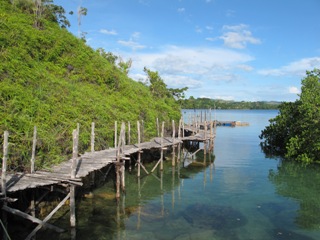 organized our accommodations for this trip on the internet. She starts us at this bed and breakfast called Sakatia Towers. We made a beeline to the guy and chucked our gear in his jalopy of a car. We hopped in and then like all taxi drivers of remote corners of the world, he peeled off at mock speed to the dark, wet, potholed, lawless roads of Madagascar. The first thing we always do is look for that seat belt but it’s rare that you have one that works. These were missing altogether.
organized our accommodations for this trip on the internet. She starts us at this bed and breakfast called Sakatia Towers. We made a beeline to the guy and chucked our gear in his jalopy of a car. We hopped in and then like all taxi drivers of remote corners of the world, he peeled off at mock speed to the dark, wet, potholed, lawless roads of Madagascar. The first thing we always do is look for that seat belt but it’s rare that you have one that works. These were missing altogether. We sped along for an hour, first through thick jungle away from the remote airport and then through several villages. You can’t believe how dark it is here at night. Naturally it was dark because it was night and raining but it 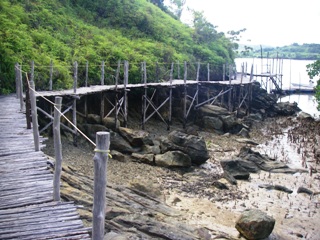 appears very few people have electricity either. We finally stopped at what turned out to be a remote beach on a lagoon. From the dark came a couple voices. These guys were obviously from Sakatia Towers and they grabbed our bags and we followed them down a trail to a beach tripping and stubbing our toes most of the way. Then we waded out knee deep to a boat. The surf was rolling gently, but enough to soak us to the waist. We were already exhausted from travel so we could barely raise our wet legs aboard this boat. Off we went into the darkness of the ocean headed for the remote island of Sakatia.
appears very few people have electricity either. We finally stopped at what turned out to be a remote beach on a lagoon. From the dark came a couple voices. These guys were obviously from Sakatia Towers and they grabbed our bags and we followed them down a trail to a beach tripping and stubbing our toes most of the way. Then we waded out knee deep to a boat. The surf was rolling gently, but enough to soak us to the waist. We were already exhausted from travel so we could barely raise our wet legs aboard this boat. Off we went into the darkness of the ocean headed for the remote island of Sakatia. It was a short ride and before we knew it we were wading ashore at  another pitch black beach. There was a glimmer of light on a hill above the beach but all I remember was my flip flops sticking to the mucky bottom under the swooshing waves. Finally the ground firmed up and we walked up five minutes of steps. There it was, the light from a porch and a man holding a pair of welcome drinks. The 55 hour journey from Victor, Idaho to Sakatia Island, Madagascar was over.
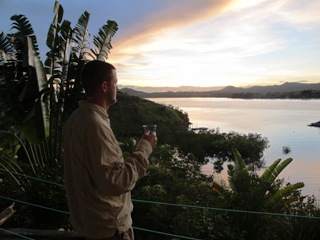
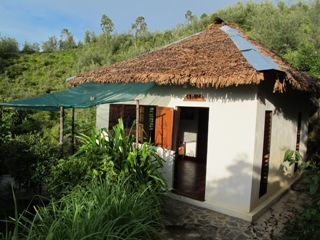
another pitch black beach. There was a glimmer of light on a hill above the beach but all I remember was my flip flops sticking to the mucky bottom under the swooshing waves. Finally the ground firmed up and we walked up five minutes of steps. There it was, the light from a porch and a man holding a pair of welcome drinks. The 55 hour journey from Victor, Idaho to Sakatia Island, Madagascar was over. Sakatia Towers bed and breakfast is fantastic. Granny booked it through and outfit called Jenman Safaris. We are the only guests here. We have a staff of about six providing us breakfast and dinner. We have a cool little 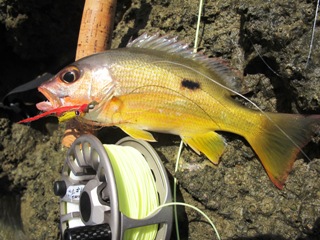 room with enough mosquito netting to entangle myself badly if I have too many brews, and a view of the Indian Ocean and mainland Madagascar that is breath taking.
room with enough mosquito netting to entangle myself badly if I have too many brews, and a view of the Indian Ocean and mainland Madagascar that is breath taking. The boys saw our tired and hungry look last night and fed us a delicious zebu dinner (whatever the heck a zebu is) with a few beers and to bed we went. It stormed all night. I mean like vicious thunderstorms but amazingly we awoke to calm and sunny skies. It really is beautiful here. I went exploring at about 6 AM while Granny slept in. I found a few places to dunk a fly and after breakfast I did just that. The tide was low. Never being here before I didn’t know 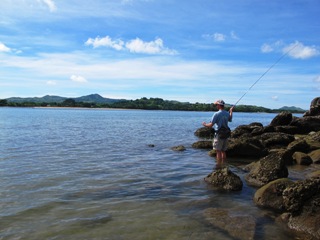 how low but I can tell you now it was low. Today we had a fluctuation from low to high of about 18 feet! The terrain is basically very calm sea with rugged slippery rocks covered in razor sharp oyster-looking shells. You can wade in the water but with care. There are gorgeous corals everywhere and spiny black sea urchins that could ruin a trip in a heartbeat. I tossed a yellow and red Clouser minnow about a size 2 on my 7-weight Ross with the floating Scientific Angler Sharkskin Tropic line WF7F. The rod would be overmatched if I hooked anything big, but for prowling the first morning it would do. Other than a few needle fish thrashing on my fly, action was slow. I landed a gorgeous
 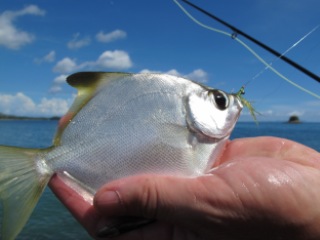 little snapper of specie I’ll need to look up later, but that was it. Despite the lack of fish eating my fly, the corals are swarming with tropical reef fish. I saw plenty of colorful ones and many were blue.
how low but I can tell you now it was low. Today we had a fluctuation from low to high of about 18 feet! The terrain is basically very calm sea with rugged slippery rocks covered in razor sharp oyster-looking shells. You can wade in the water but with care. There are gorgeous corals everywhere and spiny black sea urchins that could ruin a trip in a heartbeat. I tossed a yellow and red Clouser minnow about a size 2 on my 7-weight Ross with the floating Scientific Angler Sharkskin Tropic line WF7F. The rod would be overmatched if I hooked anything big, but for prowling the first morning it would do. Other than a few needle fish thrashing on my fly, action was slow. I landed a gorgeous little snapper of specie I’ll need to look up later, but that was it. Despite the lack of fish eating my fly, the corals are swarming with tropical reef fish. I saw plenty of colorful ones and many were blue. I also saw two very amazing angel fish that suspended themselves to look just like floating debris. When they felt up to it they would swim down and eat something than back to being debris again. Cool stuff! Sakatia Towers specializes in organizing wildlife tours and helping people see lemurs etc. However, Granny told them in her email that we wanted to fish. It turns out they don’t know lots about fishing so they set us up a meeting with a man named George Emilson. On the internet, prices for 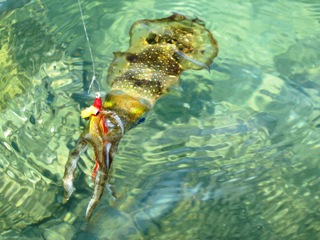 boat fishing average over $500 a day. That’s because the only thing offered is blue water fishing. Madagascar is newly famous for its billfishing. Blue water fishing is always very expensive because of gas and boat quality. Regardless of whether or not it’s worth it, Granny and I can’t afford that kind of money so I was prepared to haggle. Our goal was to negotiate three days of guided fishing for around $1000. It took me two seconds to realize George likes to haggle also. And to make a long story short, George and I settled on four days of fishing, a mix of inshore and offshore for $1200 US cash. That puts us over our budget but what the heck. I’ll paint more when I get
 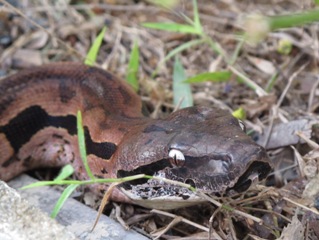 home and Granny can work some overtime. I reluctantly gave George $600 up front. I hate doing that in foreign country but I can’t blame him for wanting it. He needs to organize his boat, get fuel etc. We are scheduled to meet him at 7:30 AM tomorrow. He says he’s seen a fly rod and he has a plan. I’ve heard that before so Granny and I are just mentally prepared for an adventure. We spent the rest of our day fishing the rocks while the tide rolled back in. I stuck to the same rig and while Granny checked out the cool crabs and shells of the tide pools I landed one more new species. It was a mono fish, nothing spectacular but a new one. We also played with a squid that attacked my fly every time I cast. Then catching me by surprise, a decent sized grouper nailed my Clouser and escaped by tangling me in the coral. That led to my first swim of the trip to retrieve my fly line. The last thing I need is to lose a fly line on the first day. After fishing we chilled out on our room porch with a tall cold beer. Then we headed back up to the main porch. Granny was walking a good distance ahead and laughed when she noticed the camp help put a fake snake on our walk. I thought it was pretty funny too. You can’t scare the Americans we thought. But then the snake moved. It was a 6 foot long tree boa that started slithering along with us as if he too was headed for dinner. Granny and I don’t mind even big snakes. We have neat snake stories from previous travels in Africa that prepared us for life with snakes. Our first reaction now is to keep it quiet as you never know how the camp help will react. We don’t want them to see the snake
 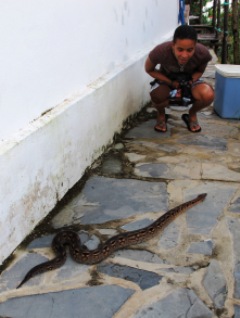 because we don’t want them to kill it, which unfortunately is often the case with locals and snakes. We simply observed the stunning creature until he finally left the walk and disappeared into the thick jungle. Then I went back to our room to close the door! At dinner I asked our camp host Frankie if there were snakes around. He said no and the other helpers chirped in. “No there are no snakes on the island”. I knew this would be their answer. It always is no matter where you go on the planet. All camps, hotels and lodges want their place to be known as “snake free” environments. That’s about when I flipped on my digital camera and showed them some of our pictures and asked them what it was. You should have seen the looks on their faces! Let’s just say there were a few shrieks. There are snakes here and I could tell one dude sees them all the time. In fact he recognized this snake and started telling stories of the cats he’s eaten around camp. Ok, I’m exhausted. It’s been a remarkable first day and I rambled on too long. But that’s traveling in a cool place. Every day is full of surprises.
boat fishing average over $500 a day. That’s because the only thing offered is blue water fishing. Madagascar is newly famous for its billfishing. Blue water fishing is always very expensive because of gas and boat quality. Regardless of whether or not it’s worth it, Granny and I can’t afford that kind of money so I was prepared to haggle. Our goal was to negotiate three days of guided fishing for around $1000. It took me two seconds to realize George likes to haggle also. And to make a long story short, George and I settled on four days of fishing, a mix of inshore and offshore for $1200 US cash. That puts us over our budget but what the heck. I’ll paint more when I get home and Granny can work some overtime. I reluctantly gave George $600 up front. I hate doing that in foreign country but I can’t blame him for wanting it. He needs to organize his boat, get fuel etc. We are scheduled to meet him at 7:30 AM tomorrow. He says he’s seen a fly rod and he has a plan. I’ve heard that before so Granny and I are just mentally prepared for an adventure. We spent the rest of our day fishing the rocks while the tide rolled back in. I stuck to the same rig and while Granny checked out the cool crabs and shells of the tide pools I landed one more new species. It was a mono fish, nothing spectacular but a new one. We also played with a squid that attacked my fly every time I cast. Then catching me by surprise, a decent sized grouper nailed my Clouser and escaped by tangling me in the coral. That led to my first swim of the trip to retrieve my fly line. The last thing I need is to lose a fly line on the first day. After fishing we chilled out on our room porch with a tall cold beer. Then we headed back up to the main porch. Granny was walking a good distance ahead and laughed when she noticed the camp help put a fake snake on our walk. I thought it was pretty funny too. You can’t scare the Americans we thought. But then the snake moved. It was a 6 foot long tree boa that started slithering along with us as if he too was headed for dinner. Granny and I don’t mind even big snakes. We have neat snake stories from previous travels in Africa that prepared us for life with snakes. Our first reaction now is to keep it quiet as you never know how the camp help will react. We don’t want them to see the snake because we don’t want them to kill it, which unfortunately is often the case with locals and snakes. We simply observed the stunning creature until he finally left the walk and disappeared into the thick jungle. Then I went back to our room to close the door! At dinner I asked our camp host Frankie if there were snakes around. He said no and the other helpers chirped in. “No there are no snakes on the island”. I knew this would be their answer. It always is no matter where you go on the planet. All camps, hotels and lodges want their place to be known as “snake free” environments. That’s about when I flipped on my digital camera and showed them some of our pictures and asked them what it was. You should have seen the looks on their faces! Let’s just say there were a few shrieks. There are snakes here and I could tell one dude sees them all the time. In fact he recognized this snake and started telling stories of the cats he’s eaten around camp. Ok, I’m exhausted. It’s been a remarkable first day and I rambled on too long. But that’s traveling in a cool place. Every day is full of surprises. Stay tuned for how our first guided fishing day turns out! (Once again, I will post day by day accounts. But internet is rare here in Madagascar. It may not post for several days.)

 We are about done with our 18 hour layover here in
  You could say we were a little surprised this morning when we woke to the wheels touching down in Syria. We got on the wrong flight last night! No water. No fishing. And no fun at all! Just kidding. Happy April Fools !!!!!!!
 Only a few years ago we would have sprawled out in a dark corner in the airport. But being this is our anniversary we opted to taxi to the
 Opening day of baseball is one of my favorite days. My Fantasy teams (all three) are ready to rock. The
 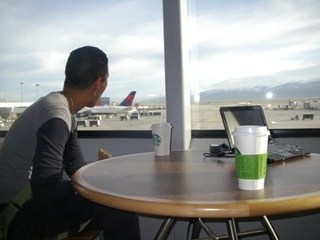 Granny and I said goodbye to the snow at 4 AM this morning. We drove over
  Speaking to the fly fishers in
 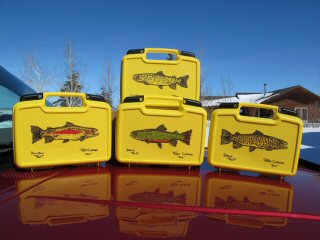 I have been locked down in my work for three weeks now. The closest I’ve been to fishing is packing for
 around for seed – as long as Granny keeps the feeders full this weekend!
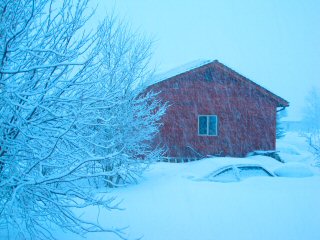
  Yes, that’s my old car almost completely buried in snow in mid March. There’s some absolute garbage falling from the sky today here in
  because of deep snow and even better, the lake is covered with three feet of ice. Nonetheless, I sit here daydreaming about tailing mirror carp.
  might incorrectly assume that it is a separate species. But it’s not. It is actually descended from common carp bred by monks back in the 12th century to have few or no scales, making them easier to prepare for eating (Although we’ve tried, my friends and I haven’t had much success making them edible!).
  catch, no two will be the same, but all will be beautiful.
 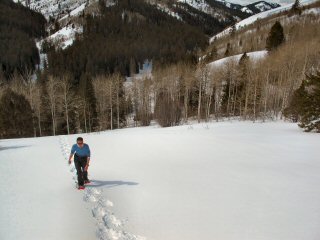 Today is officially the first day I can wake up and not be bummed that I’m home instead of fishing the
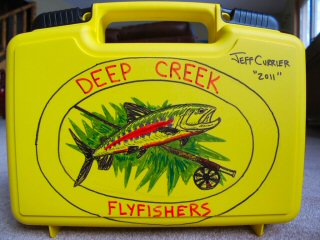
  I also managed to catch up on some art projects. I decorated some
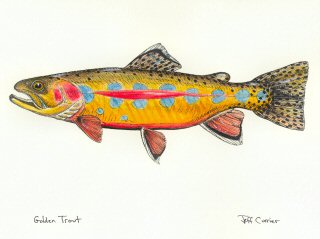
  The species info I posted last week about several fish of the
  next week I go to
 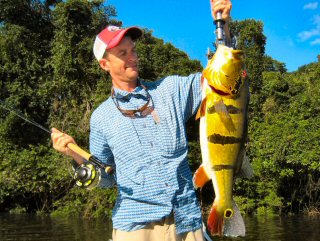 I will be hosting my annual peacock bass trip to the
  The snow here in the
  As promised I’m going to keep writing about the many fish species you might catch while
  in shallow sandy areas often times with the butterfly peacocks. They are spooky because of the shallow water but if your fly gets to them before they see you casting you’ll get a strike for sure. I’ve never seen them bigger than the pictures I’ve provided but they are known to reach 6lbs. What I like about them is their beauty. Even though I show two different colored ones, both are all the same species.
  along the bank you find them. Usually several burst out after your fly but only the biggest one can fit it in his mouth.
  hurts to have a good look at them!

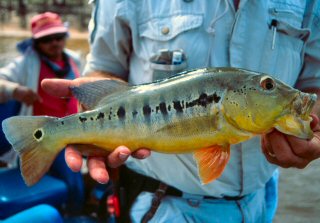


 The floods in the Amazon are very unusual for this time of year. Now is towards the end of the dry season and typically the water levels are extremely low on the rivers we fish. Usually the water is clear enough that we sight cast to huge peacocks. But it is the Amazon. It is the rainforest and sometimes Mother Nature can throw a twist. We’ll just have to hope that everything gets back to normal for next year. Did I say “next year”? Yes I did. Amongst my rescheduling of this years trip, I went ahead and booked next year’s trip. The dates for 2012 are February 11-18 and I already signed up two. So if you’re ready to enjoy this incredible fishery, contact me soon!


